Application of ceramics on underfloor heating systems
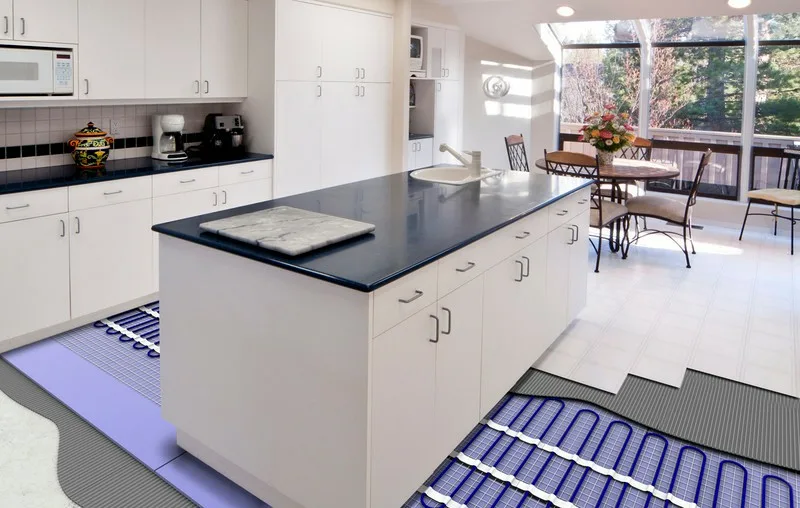
Surface preparation
Proper surface preparation is very important when applying ceramics to underfloor heating systems. The application area must be sound, dry, clean, dust-free and transportable. All oil, rust, grease and paraffin residues that could weaken the adhesion must be completely removed from the surface. There should be no more debris on the surface and the surface should be saturated with moisture. In addition, the surface should be primed with Universal Primer to reduce the absorbency of the surface and ensure a healthy adhesion surface.
If there are excess pieces of iron or wood on the surface, they should be removed and the gaps repaired two days in advance with a suitable repair material. In addition, it is important to make sure that the thermal and sealing tests of the underfloor heating system are positive. After making sure that there are no cracks or other structural problems in the screed used for the heating system, waterproofing and ceramic application can be started.
Ceramic bonding and joint filling application
Special adhesives are required for gluing ceramic tiles against stretching and shrinkage caused by temperature changes in underfloor heating systems. For this purpose, FugaPower Flex CG2W adhesive should be used, meeting the requirements of minimum class C2 and S1 according to EN12004-1 standards. These adhesives are resistant to temperature changes and ensure healthy adhesion of ceramics.
FugaPower Regular CG1 or FugaPower Pro CG2W silicone-containing, flexible and antibacterial joint fillers should be used as joint fillers to ensure long-term durability and flexibility. These materials preserve the aesthetic appearance of ceramics, and also prevent damage and ensure sealing in underfloor heating systems.